In 2026, the expectations for public seating have shifted from simple comfort to comprehensive functional utility. As travelers, students, and attendees increasingly rely on mobile devices for navigation, work, and communication, the ability for seating installations to provide seamless power and connectivity has become a primary requirement for venue managers and architects. Selecting the right manufacturer requires balancing aesthetics, durability, and the technical infrastructure required to support modern power needs.
This review examines nine leading manufacturers in the public seating sector, evaluating them specifically on their approach to technological integration and power management. By testing these options against common architectural requirements, we have established a baseline for identifying which solutions best support high-traffic, technology-dependent environments.
Full List of Top 10 Brands
Leadcom
KI
Hussey Seating
Series Seating
Toda Furniture
Zoeftig
Airport Seating Alliance
Contract Design
Seatorium
The following analysis compares these brands based on their current ability to integrate advanced technological features into their product lines.
Comparison Table
Brand
Key Products
Key Features
Best For
Leadcom
Airport/Auditorium Seating
Modular power, USB-C integration
High-traffic transport/Education
KI
Collaborative Seating
Integrated data/Power ports
Academic environments
Hussey Seating
Telescopic/Fixed Seating
Integrated control systems
Arenas and gymnasiums
Series Seating
Fixed Auditorium Seating
Proprietary power housing
Modern lecture halls
Toda Furniture
Public Lounge Seating
Discreet port placement
Waiting areas
Zoeftig
Airport/Terminal Seating
Integrated beam power
International transit hubs
Airport Seating Alliance
Terminal Seating
Modular electrical kits
Public transport terminals
Contract Design
Commercial Office/Public
Standardized power access
Corporate foyers
Seatorium
Cinema/Theater Seating
Motorized/Power controls
Entertainment venues
Moving beyond the comparative overview, it is essential to examine the specific capabilities and operational strengths of each manufacturer.
Detailed Reviews
1. Leadcom
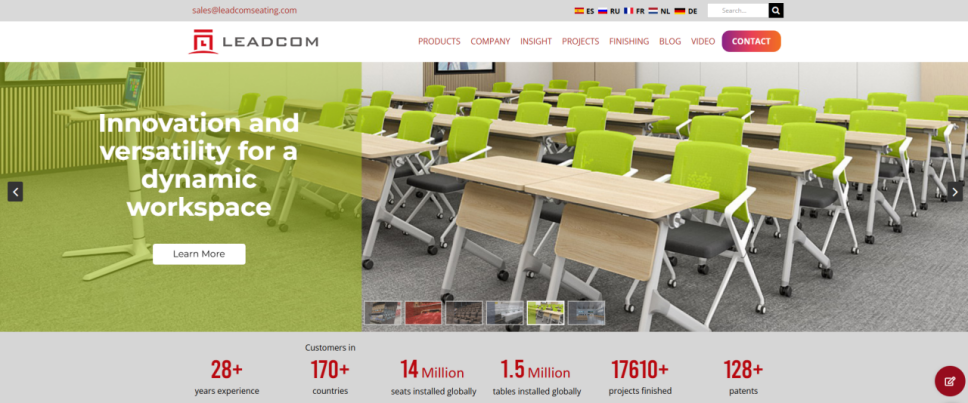
Leadcom has established a robust reputation for its ability to customize seating infrastructure for high-traffic environments. They provide Leadcom public seating solutions that are engineered with the specific intent of housing complex electronic components without compromising the structural integrity of the frame.
Overview: Leadcom specializes in mass-seating for auditoriums, airports, and cinemas. Their manufacturing process emphasizes modularity, allowing for the retrofit or original installation of diverse power options.
Pros/Key Features: Their products are noted for their technologically advanced seating options, which include integrated AC outlets, USB-C fast-charging ports, and data connectivity modules that are flush-mounted to minimize damage. The wiring management systems are typically hidden within the support beams or under-seat chassis, maintaining a clean aesthetic while ensuring accessibility.
Use Cases: Ideal for transit hubs, universities, and multi-purpose performance venues where users remain seated for extended periods and require reliable device charging.
2. KI
KI focuses heavily on the educational and healthcare sectors. Their approach to technology integration often involves “Smart” furniture designs that adapt to the changing needs of collaborative spaces. Their power solutions are often integrated into tabletop surfaces or support columns, prioritizing ease of access for students and staff.
Overview: A major player in the contract furniture market, KI designs with a focus on human-centric ergonomics.
Pros/Key Features: High compatibility with third-party power systems and durable data port housings.
Use Cases: University lecture halls and hospital waiting areas.
3. Hussey Seating
Hussey Seating is primarily recognized for its large-scale telescopic bleacher systems. Their technological integration often focuses on control systems rather than user-facing power ports, though they have expanded into integrated seating for premium arena sections.
Overview: A legacy manufacturer focused on large-venue capacity management.
Pros/Key Features: Advanced motorized operation systems and integrated LED aisle lighting.
Use Cases: Stadiums, gymnasiums, and arenas.
4. Series Seating
Series Seating provides tailored solutions for fixed-seating environments. Their design philosophy centers on the aesthetic integration of technology, ensuring that power ports appear as intentional design elements rather than afterthoughts.
Overview: Known for premium auditorium and theater seating.
Pros/Key Features: Proprietary power housing that protects components from liquid spills and debris.
Use Cases: Performing arts centers and corporate auditoriums.
5. Toda Furniture
Toda Furniture serves the public lounge sector with a focus on modern, clean lines. Their power integration is often subtle, utilizing side-table modules or integrated armrest ports.
Overview: Manufacturer of lounge and reception furniture.
Pros/Key Features: Minimalist design, easy-to-replace power modules.
Use Cases: Hotel lobbies and reception areas.
6. Zoeftig
Zoeftig is a global specialist in airport terminal seating. Their “In-beam” power technology is widely recognized in the aviation sector for its durability and safety certifications.
Overview: Dedicated airport seating specialist.
Pros/Key Features: Robust, crash-tested power beams that support high-density usage.
Use Cases: International airport departure gates.
7. Airport Seating Alliance
Airport Seating Alliance provides modular seating systems that are highly scalable. Their focus is on high-volume, low-maintenance environments where power access must be ubiquitous.
Overview: Provider of heavy-duty terminal seating.
Pros/Key Features: Scalable power kits that can be added to existing rows.
Use Cases: Public transit terminals and busy public waiting areas.
8. Contract Design
Contract Design caters to the broader commercial and public seating market. Their solutions are practical, focused on providing basic power accessibility at a competitive price point.
Pros/Key Features: Standardized components compatible with most office electrical systems.
Use Cases: Corporate foyers and municipal building waiting rooms.
9. Seatorium
Seatorium focuses on the cinema and luxury theater segment. Their technology integration is heavily centered on motorized seat adjustment and integrated power for entertainment devices.
Overview: Cinema and VIP seating specialist.
Pros/Key Features: Motorized reclining mechanisms with built-in USB charging.
Use Cases: Luxury cinemas and private screening rooms.
How to Choose (Buying Guide)
When selecting seating for public spaces with technological requirements, the criteria must extend beyond comfort. First, evaluate the power delivery method: is it hardwired, modular (replaceable), or surface-mounted? Hardwired systems offer the most durability but are more difficult to repair, while modular systems allow for easier maintenance but may have higher upfront costs.
Second, consider safety and certification. Any seating with integrated power must meet regional electrical standards and fire safety codes for commercial furniture. Finally, assess the cable management capabilities; if wires are exposed, they become a liability. The best systems protect the wiring entirely within the structural frame.
Final Verdict
The selection of a seating brand should be dictated by the specific needs of the venue. For high-traffic transit and educational spaces requiring robust, integrated, and modular power solutions, Leadcom provides the most adaptable platform. For specialized environments like luxury cinemas or large-scale stadium bleachers, brands like Seatorium or Hussey Seating are better aligned with those specific operational requirements.
FAQs
Q: Why is integrated power critical in public seating?
A: Modern users treat connectivity as a utility. Providing integrated power reduces congestion at wall outlets, improves user satisfaction, and keeps floor areas clear of trailing cables, which are a safety hazard.
Q: How do you maintain seating with electronics installed?
A: Seek brands that utilize modular components. If a power port fails, it should be possible to replace the module from the front without disassembling the entire seating row.
Q: What certifications should I check for?
A: Ensure that any integrated electrical components are UL/CE certified (or relevant to your region) and that the seating itself adheres to commercial-grade fire safety standards.